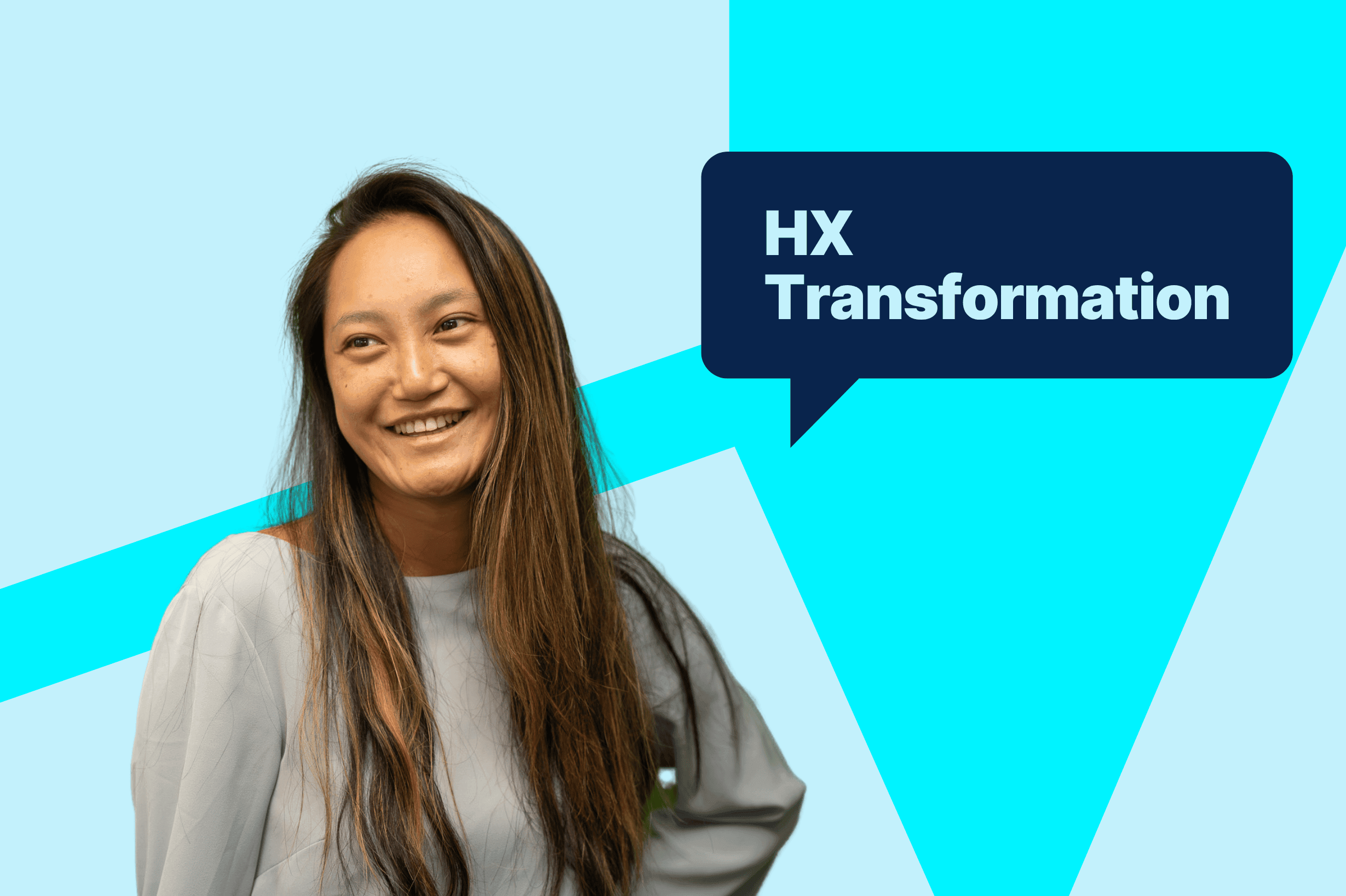
Making a wide-ranging contribution to HR in the energy sector
Written by: Anne Rosink, HX professional, September 2025
In this case study, you’ll learn how Anne Rosink supported the HR team of an organization in the energy sector for six months. She took charge of day-to-day operations and also contributed to strategic issues. By adapting quickly, providing people-centered, tailored solutions, and actively voicing her opinions, she was able to take the pressure off the team and give her own professional development a boost.
Background and Context
The organization’s HR team was under pressure: there wasn’t enough capacity, and day-to-day operations had to continue. In my role as an HR Associate, I ensured that personnel changes were processed in a timely manner, the inbox was properly managed, and questions from employees and managers were addressed quickly. At the same time, I also took on projects, such as rewriting the mobility policy and leading brainstorming sessions on green employment conditions. In this way, I combined operational tasks with strategic initiatives.
Challenge and Approach
HX in My Approach
A people-centered approach was central to my work. I listened carefully to my colleagues, brought structure to the workplace, and contributed ideas on sustainable and attractive employment conditions. In brainstorming sessions, we explored creative ideas around “green employment conditions,” such as an extra day off for traveling by train, life-stage-aware leave days, and sustainability discussions. These sessions demonstrated how HR can add value not only by ensuring processes run smoothly, but also by actively contributing to the work experience and addressing social issues.
Lessons and insights
This assignment gave me a firsthand understanding of just how valuable the operational foundation of HR is. It is precisely in the role of HR Associate that you gain a thorough understanding of all processes in day-to-day practice—from systems to collective bargaining agreements and personnel policies. It is the foundation upon which everything else in HR is built.
In addition, one of my personal development goals was to become more assertive. As an HX professional, you set personal development goals for yourself before taking on an interim assignment like this one. An important development goal for me was to become more assertive. With guidance from both Rvdb and my client, I was able to actively practice this goal in real-world situations. I learned to better set my boundaries without losing my enthusiasm and willingness to help.
What surprised me the most was how connected I felt as a temporary employee. While people often think you keep your distance, I experienced exactly the opposite. Both at Rvdb and at my client’s company, I was fully welcomed into the team. My ideas were taken seriously, and I felt like part of the team from day one. This experience reaffirmed for me how valuable it is to work in a close-knit, people-oriented team where there’s room to learn and grow. A good team is worth its weight in gold!
Results and Impact
The continuity of day-to-day HR operations remained assured, while there was also room to update policies and explore creative employment conditions. The HR handbook preserved the knowledge gained and made it easier to train future colleagues. Employees and managers received timely and reliable HR support, which restored a sense of calm and trust within the team.
One word: versatile
I would describe this assignment as multifaceted. Precisely because I was able to contribute on both the operational and strategic levels—from personnel changes and HR services to policy development and brainstorming sessions. It was energizing to realize that, as an interim professional, I could not only provide support but also make a real impact.
Share ....
Related insights