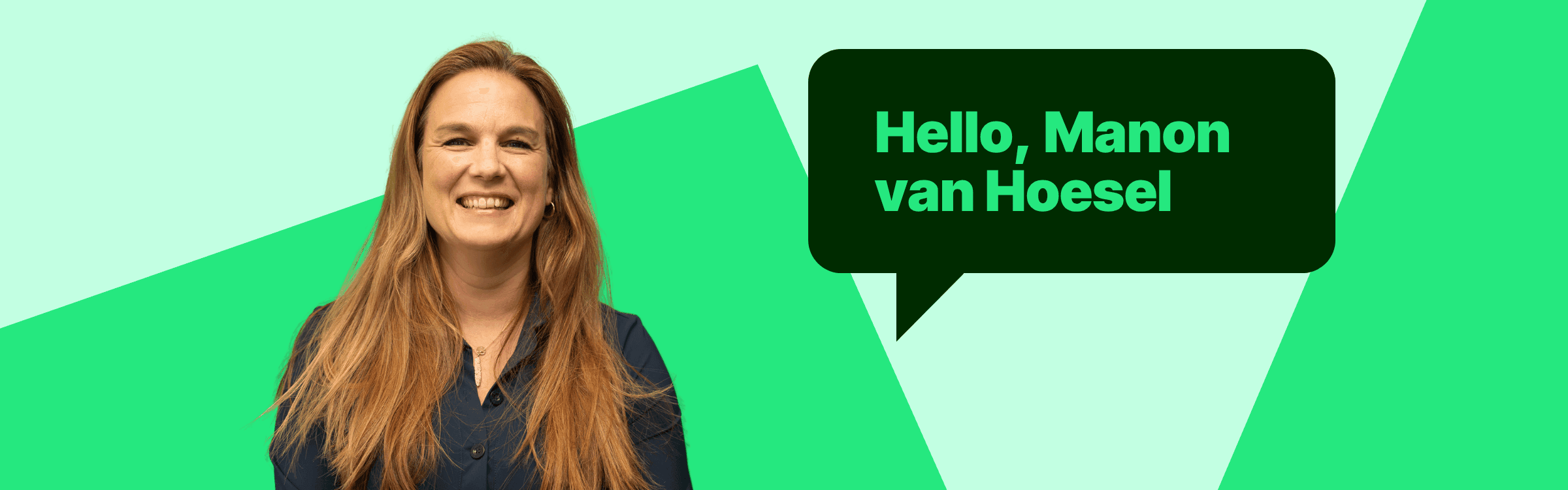
Goodbye, Human Resources; Hello, HX
Written by: Gert-Jan van Wijk, Founder of Opire, January 2025
Manon is on a mission. “The days of old hierarchies and profit maximization are over at Rvdb. We’re committed to social impact, with equal ownership and a balance between business and social success. We want to say goodbye to old ways of thinking and treating people as resources, and hello to people-centered organization. Our mission at Rvdb is therefore ‘Bye Bye Human Resources, Hello Human Experience.’”
Employment practices are becoming more equitable, and leadership reinforces the human element in organizations. It helps people and teams grow and get the best out of their teams. Traditionally, the board consisted of white men over 50. That’s not a good representation in a company where 70% of the workforce is female. “There were stereotypical perceptions: women are soft, gentle, and not good at leading, while men are tough, powerful, and results-oriented. In a repressive system, these polarities become more pronounced. I now see more women talking more easily about ‘targets’ and having difficult conversations, but in a different way: more collaboratively, focused on dialogue and equality. Masculine and feminine strengths are represented in both men and women.”
“Masculine and feminine forces are represented in both men and women.”
We are currently designing a “School of HX.” Through this program, we will train our own staff based on the HX vision. We will continue to refine this training program and open it up to the large community of people we have facilitated and worked with over the past decades. In addition, we are developing the building blocks to implement HX within organizations. We want to strengthen the movement within organizations to create a meaningful, stimulating, and inclusive work environment that improves the overall employee experience. That may sound grandiose, but that’s what we do at Rvdb and what I’ve experienced firsthand. I was out of commission for nearly three years due to severe burnout. Our shareholder bylaws state that after one year, I must offer my shares to the other shareholders. My current co-owners, Bob and Maaike, said, “We’ll wait until Manon is well enough to return so she can make that decision together with us.” The outside world had already written me off: someone with burnout doesn’t come back. And here we are, three years later, operating as equal owners. That is HX in its purest form at Rvdb.
I see that the biggest challenge for clients is maintaining a holistic view of humanity under difficult circumstances. People aren’t products to be used. I’m a mother, daughter, wife, partner, and friend. I have a dog, and sometimes I’m not at my best. All of that influences how I approach my work. Organizations need to consider the whole person when they’re reorganizing, downsizing, or growing. People should be listed on the balance sheet as an investment, not as personnel expenses. People are what drive success. This is particularly poorly understood in Anglo-Saxon culture. If the EBITDA isn’t in order, you can lay off 20 people, but then you still have to keep paying them. You destroy all loyalty and commitment among those who remain. They also see: so this is how we’re treated.
“You can’t change a culture. But you can change behavior.”
Improving the Human Experience therefore also means approaching change differently—specifically, focusing on changes in human aspects such as behavior and culture. We’re developing HX building blocks for that purpose. Since 2012, we’ve also undertaken a wide range of initiatives at Rvdb to drive cultural change. With varying degrees of success. We’ve learned a great deal from those experiences. Rvdb had a “you ask, we deliver” culture, and we wanted to become a more professional partner for our clients. First, we tried to drive cultural change through new job profiles. That turned out to be a very complicated project, and it didn’t work. We needed an anchor for change. We developed this following an initial two-day workshop on culture. The exercise everyone remembers was the assignment to stand in a circle arranged by seniority: from the person who had joined most recently to the one with the longest tenure at Rvdb. This revealed all sorts of divisions. There were gaps in the line during the years of crisis, when we weren’t hiring anyone. The old guard saw themselves standing there and wondered: Do I still belong here? In the years that followed, we said goodbye to several people. People leaving and new people joining are an important catalyst for cultural development. After that workshop, I began writing down my long-term vision. It was called “MovingForward.” That was our first long-term vision. Now, for the first time, we took a more critical look: which clients do we work with and which do we not, and how do we fulfill our role as a discussion partner? In addition, we also began working on performance management. A thorough personal evaluation of your performance is an important part of the Human Experience. It gives a direct boost to your culture. You can’t change a culture, but you can change behavior. Cultural anchors—such as a long-term vision, a robust performance development cycle, and meaningful conversations during the onboarding of new employees—help with this. These are all components of our HX building blocks for organizations.
“Under pressure, things become more fluid, and the focus naturally shifts more toward action.”
Of course, we all want to change out of ambition, but in my experience, while ambition provides energy, the pitfall is getting stuck in endless talk. When you change out of a sense of urgency, there’s no time for that. Under pressure, things become more fluid, and the focus naturally shifts toward action. That’s when things really start to move. “Let’s act ourselves into a new way of thinking, rather than thinking ourselves into a new way of acting.” That has truly become my motto. In a growing organization, people in management positions also become more important. They are the ones who translate the vision and strategy into concrete actions and priorities. In an HX-focused organization, the vision and strategy are clear, and everyone knows how they can contribute to them.
You know you’re achieving results when people are happy in the broadest sense of the word. By that, I mean the entire range of stakeholders: from people looking for an HR position to employees, and from customers to managers. Over those ten years, we’ve laid a solid cultural foundation. I know this very well because I was away for three years. When I returned, I found that the culture hadn’t changed in essence.
“Bye Bye HR, Hello HX” has become the new anchor for change as a result of the new strategy. It thus serves as the starting point for a meaningful conversation. In determining the new direction, we involved everyone in the company. First, we asked everyone to submit their ideas for the new strategy in a 2-minute video. We invited the creators of the most compelling videos to contribute their ideas during the two-day strategy session. Now we’re strengthening our relationship with customers and continuing to implement this strategy. That’s not just a matter of checking off items on a list. Above all, it’s about communicating the same vision in countless ways, over and over again, and asking our people to bring it to life. Then, ensuring that everyone understands it, knows how to contribute, and can grow within that framework is the essence of enhancing the human work experience.
“It should become more normal to break up.”
As the leader of Rvdb, I consider trust, equality, and freedom to be very important. You’re allowed to be yourself—with your “ups and downs”—and everyone has their own ambitions. Those ambitions do need to be a good “fit” for the company, though. What I’d like to see is for us to be much better at reflecting on our behavior—to show vulnerability and clearly articulate what we expect from one another. To be in constant dialogue about the value you add. Then it will also become more natural to part ways. Not because something or someone has failed, but because an ambition can be better realized elsewhere. I hope that when that moment comes for me, people will say afterward: “We miss Manon’s cheerfulness and sense of humor, but the company is so self-sufficient that we’ll be on solid ground for years to come.”
Share this interview
Related insights